Key takeaways
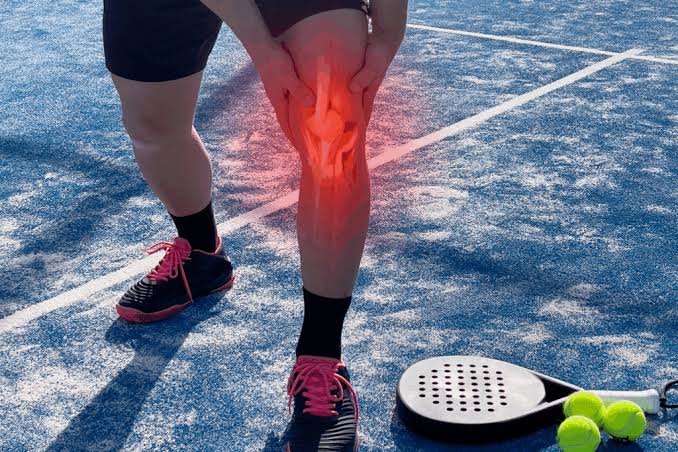
- Pickleball loads knees through constant lateral movement and sudden stops, the exact motions that expose existing arthritis and weak stabilising muscles.
- Physical therapy strengthens the muscles around the knee but, per Dr. Kendall Perrine, ND (Purist Natural Medicine, Arroyo Grande), cannot repair ligament and tendon attachments or regenerate cartilage.
- Regenerative injection therapies such as prolotherapy, PRP and ozone are used for that gap, aiming to prompt your own biology to repair the tissue.
- Good candidates are in reasonably good overall health; smokers and those with uncontrolled diabetes or recent immunosuppressive treatment generally are not a fit.
- Realistic timelines: about a week back to play after ozone, about four weeks after prolotherapy or PRP.
Why is pickleball so hard on knees?
The sport is built from short lateral bursts, lunges and hard stops on unforgiving surfaces, and knees absorb whatever your hips and core do not stabilise. Dr. Perrine's clinical picture of who walks in is mostly degenerative issues: osteoarthritis layered on top of muscle weakness and ligament laxity. The knee pain is not usually one event; it is accumulated load meeting under-trained stabilisers. That is also why her most-repeated advice targets muscles nowhere near the knee, the core and glutes, which help keep the knees, hips and lower back stable during quick lateral movements.
What can physical therapy do, and what can it not?
Physical therapy builds the muscles around a joint to stabilise it, which is valuable, but it can't repair the ligament or tendon attachments themselves, and it can't regenerate cartilage. That's the gap regenerative injection therapies fill, before you'd ever consider joint replacement.
Dr. Kendall Perrine, ND, Purist Natural Medicine (Arroyo Grande, CA)
The practical takeaway is to do the physical therapy. Many cases resolve fully with it, and how you respond to it is diagnostic. She specifically asks patients whether PT helped partially, because a partial response points to tissue damage that strengthening alone cannot reach.
What are prolotherapy and PRP, explained simply?
Prolotherapy is a solution mostly made of medical-grade sugar water injected right into the injured area. It gently irritates the tissue on purpose, which signals your body to send its own repair crew, healing cells and cleanup cells, and lay down fresh, stronger tissue in a better pattern than before.
Dr. Kendall Perrine, ND, Purist Natural Medicine (Arroyo Grande, CA)
PRP works on the same idea, but instead of the sugar solution we use a concentrated dose of your own blood's healing platelets, which already carry the chemical signals your body uses to repair itself. Either way, we aren't putting a foreign substance in. We're using your own biology and giving it a stronger nudge.
Dr. Kendall Perrine, ND, Purist Natural Medicine (Arroyo Grande, CA)
Who is a good candidate for regenerative treatment?
Good candidates are generally people in reasonably good overall health, with decent nutrition and balanced hormone status. That's what your body draws from to heal. It's not a fit for people who smoke, have uncontrolled diabetes, recent chemotherapy or immunosuppressive drugs, or active issues at the injury site.
Dr. Kendall Perrine, ND, Purist Natural Medicine (Arroyo Grande, CA)
Note the honesty in that screen. A provider who tells you who is not a fit is one setting realistic expectations. She is explicit about that too: no guarantees, with any treatment, surgery included.
How long until you are back on the court?
About one week after ozone treatment, and about four weeks after prolotherapy or PRP while tissue remodels. Gentle movement is encouraged during the window; court time is not. As she puts it, pushing too soon is often what got them injured in the first place.
Does this actually keep people playing?
Regenerative care is a way to extend someone's time on the court. A lot of the time pain improves by a meaningful percentage. People play with less pain, and they can delay surgery or avoid it altogether.
Dr. Kendall Perrine, ND, Purist Natural Medicine (Arroyo Grande, CA)
These treatments are available locally, PRP in Arroyo Grande, and the full SLO County decision tree, including when to choose urgent care or physical therapy first, is here: Read more
Common questions
Can you play pickleball with arthritis in your knees?
Often yes, with modified load and strong stabilising muscles, and movement is generally part of managing arthritis. Get individual guidance from your provider, and see also our over-50 guide: Read more
Is PRP better than cortisone for knee pain?
They do different jobs. Cortisone reduces inflammation and pain but does not repair tissue; PRP aims to stimulate repair. Which fits depends on your joint, goals and health status, which is a conversation for a qualified provider.
What does a first visit look like?
Per Dr. Perrine, a discovery call first to establish fit, then a full one-hour consult covering history, prior labs and a physical exam before any recommendation. Book a discovery call
Does a softer surface help sore knees?
It may reduce impact loading while you rebuild strength. Indoor options are covered here: Read more
Keep your knees in the game. The five-minute routine built around them: Read more · All five common injuries: Read more
About the contributing expert. Dr. Kendall Perrine, ND, is a naturopathic doctor at Purist Natural Medicine, splitting her time between Arroyo Grande, CA and Dana Point, CA, with a focus on regenerative, non-surgical approaches to joint and soft-tissue pain.
Published by Pickleball Agent, the pickleball hub of the Central Coast. This article is educational and reflects the contributing expert's professional perspective. It is not medical advice, no outcome is implied or guaranteed, and healing timelines differ from person to person; consult your own healthcare provider about your specific situation.