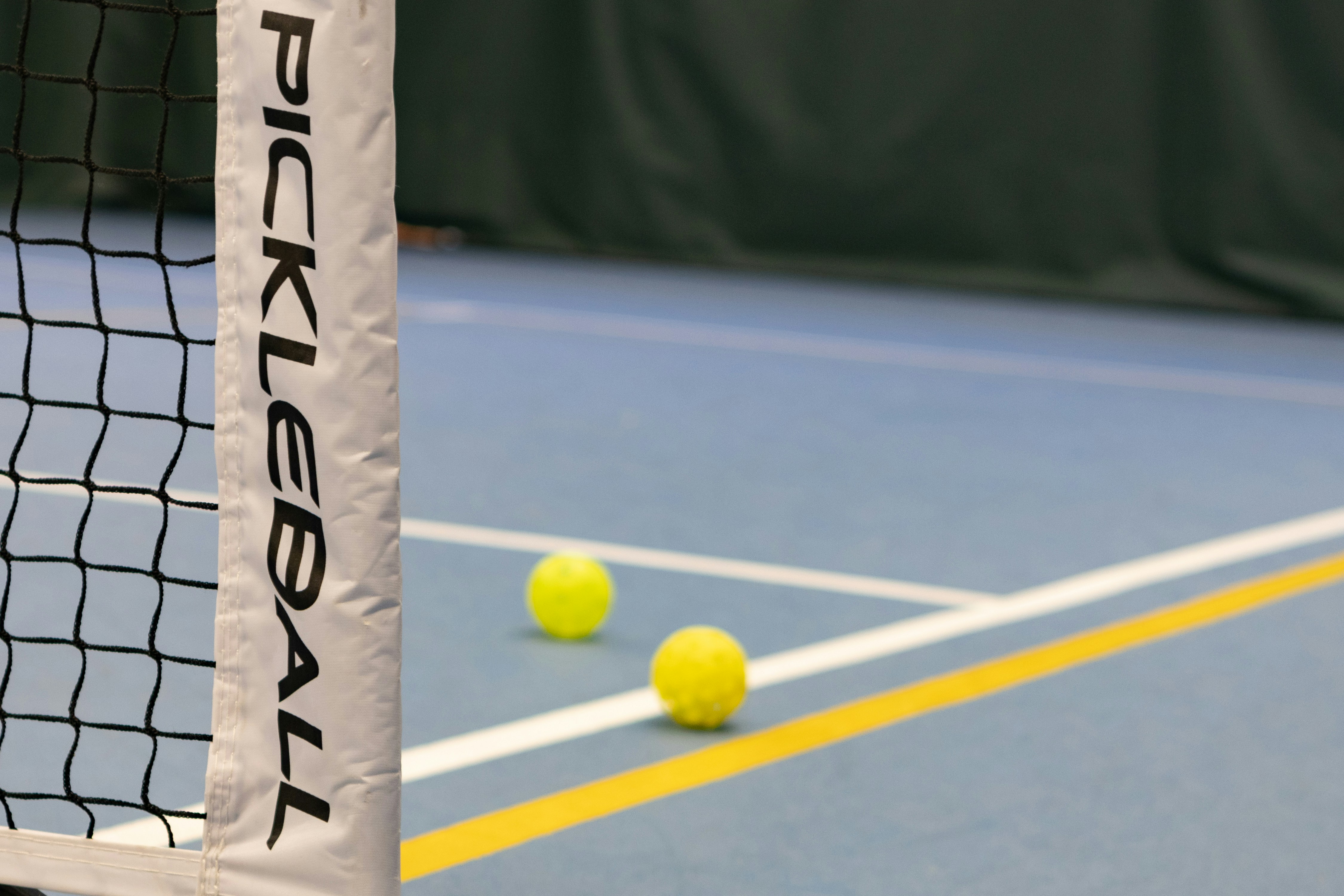
The design of the game does the work
Every barrier that makes other racket sports frustrating was accidentally engineered out of pickleball. The court is small. Twenty by forty-four feet, shared with a partner in doubles. You are never sprinting. Most points are played from a standstill or a few steps. The ball is slow. A wiffle-style plastic ball floats. You have time to react, which is the entire difference between fun and flailing. The serve is underhand. No overhead motion to learn, no double-fault spiral. Beginners get the ball in play on day one. Doubles hides weaknesses. Your partner covers half the court. A brand-new player next to an experienced one makes a functional team immediately.
"But I'm not competitive"
Good news: most pickleball is not either. Recreational open play and social events run on rotation formats where the score resets every 15 minutes and partners shuffle constantly. The culture of the sport at the community level is famously welcoming, because everyone remembers being new last year.
"But I'm out of shape"
Pickleball meets you where you are. It is real exercise, typically light to moderate cardio you control by how hard you choose to play, but nobody is running miles. It is one of the few activities where playing three times a week is realistic for someone starting from the couch, which is a big part of why millions of Americans picked it up.
The one thing non-athletes should do first
Go to a beginner intro session rather than wandering into open play cold. A thirty-minute intro covering the serve, the score, and the kitchen rule turns total confusion into confident play. Pickleball Agent runs free beginner intro sessions across the Central Coast. Free intro sessions
Never held a paddle? Come to a free intro session, or text Q and get matched into a beginner game this week. Free intro sessions